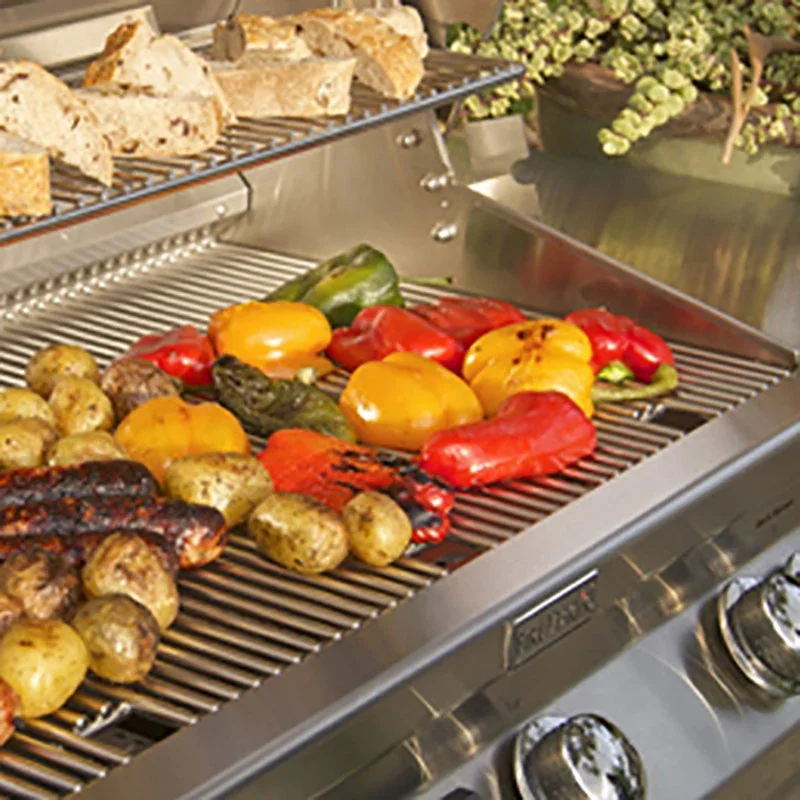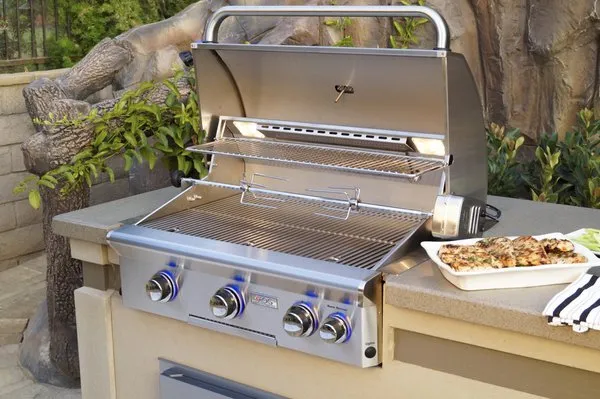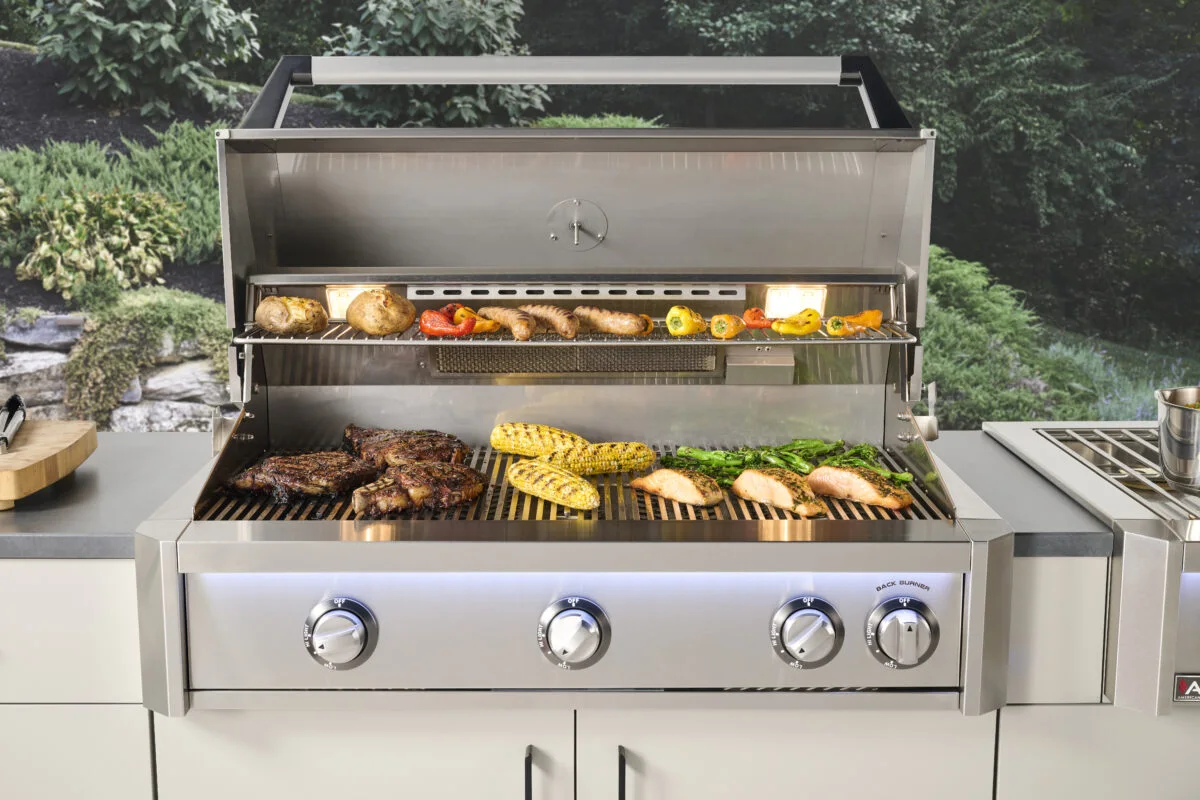

Rinse or wipe the grill with fresh water every week or two to remove salt, dry it, and keep it under a breathable cover. Polish the stainless monthly, passivate rust spots with a citric acid cleaner, and deep clean every 3 to 4 months. When buying, choose 304 stainless at minimum and 316 if the grill is within sight of the water.
Key points
- Salt deposits hold moisture on the surface and break down stainless steel's protective layer.
- A fresh water wipe-down every week or two does more than any product.
- 304 stainless needs more frequent cleaning at the coast; 316 holds up better.
- Use a breathable, vented cover and take it off to dry after rain or fog.
- Burners, heat plates, igniters and fasteners wear out first on coastal grills.
Grills near the ocean rust faster than anywhere else we work. A grill a few blocks from the beach in Orange County or San Diego can show brown staining in a single season, and burners and heat plates that last ten years inland may need replacing in three or four. Salt does not stop at the beach either. On a breezy day it carries several miles inland. The good news: most of the damage is slow and preventable with a simple routine.
What salt air does to a grill
Salt particles land on every surface and attract moisture from fog and humid air. That salty film sits on the stainless and keeps the chromium oxide layer from healing, which is what lets stainless resist rust in the first place. The result is tea staining (a brown haze), rust freckles, and eventually pitting.
Inside the grill, heat speeds things up. Burners, heat plates, igniter electrodes, wire connectors, screws and hinge pins all corrode faster. Aluminum castings can get a white, chalky corrosion. Painted steel carts and porcelain parts rust wherever the coating is chipped.
Need the part? Pro Grill can find it
Send us your brand, model and the part you need. We source OEM parts, including ones that aren't listed in our online store.
Ask Pro Grill for a partWant a pro to handle it?
Most companies in our network are dealers or have dealer accounts, so they can usually bring the right part and install it in one visit.
The coastal care routine
Every week or two
- Wipe all exterior stainless with a microfiber cloth and fresh water, or rinse with a garden hose on a gentle setting. Never use a pressure washer.
- Dry everything with a clean towel, wiping with the grain.
- Check that the cover is dry inside. If fog soaked it, take it off for a few hours on a sunny day.
Every month
- Wash the exterior with mild dish soap and water, rinse, dry, and apply a stainless polish or protectant with the grain.
- Empty the grease tray. Grease plus salt makes a sticky paste that holds moisture against the steel.
- Check the knobs, bezels and hinges for early rust spots.
Every 3 to 4 months
- Deep clean the grill: grates, heat plates, burners and firebox. See our full deep cleaning guide.
- Treat any rust freckles or tea staining with a citric acid passivating cleaner, rinse and dry. Our stainless steel cleaning guide walks through it step by step.
- Look closely at the burners and igniters for flaking and corroded wires.
Corrosion guides from stainless steel suppliers suggest that at coastal sites even marine-grade 316 should be cleaned every 3 to 6 months, and that rain alone does not do the job under covered patios. Covered outdoor kitchens actually rust faster than exposed ones in some cases, because salt builds up where rain never rinses it off.
Choosing a grill or island for the coast
- Stainless grade matters. 430 stainless (magnetic) rusts quickly at the coast. 304 is the standard on quality built-ins and works with regular care. 316 is better for oceanfront homes. A few brands offer 316 or marine-grade models; ask before you buy.
- Look at the parts that rust first: burners, heat plates, fasteners and the grill's internal frame. Cast stainless or heavy-gauge burners outlast thin stamped ones.
- Avoid painted steel carts near the water when you can.
- Our built-in grill brands guide and how to choose a built-in grill cover build quality in more detail.
Covers: the right kind matters
A cover keeps salt spray and bird droppings off, but a cheap vinyl cover that traps moisture can make rust worse. Look for a breathable, vented fabric cover that fits loosely enough to let air move. Only cover the grill once it is fully cool and dry. After rain or heavy fog, uncover it to dry. See what a quality grill cover costs.
Products that help, and ones that hurt
Helpful:
- Mild dish soap and fresh water
- Stainless polish or protectant made for appliances or grills
- Citric acid stainless cleaners and passivating gels
- Non-scratch nylon pads and microfiber towels
Harmful:
- Steel wool and carbon steel brushes (they leave iron that rusts)
- Bleach and chlorine cleaners, and pool chemicals stored nearby
- Oven cleaner on exterior surfaces
- Pressure washers
Parts that wear out first at the coast
Plan on replacing these more often than inland owners do:
- Burners: watch for flaking, holes and split seams. See burner replacement costs.
- Heat plates and briquette trays: they rust through from the center. Prices are in our heat plate cost guide.
- Igniter electrodes and wires: corrosion causes weak or no spark. Check ignition part prices.
- Knobs, bezels and grill lights.
Before ordering, get the model and serial number from the rating plate, which is usually under the drip tray, on the back of the control panel or inside the cart door. Buy OEM for valves and any gas or safety part. If you are not sure what you need, ask Pro Grill to source the right part. For brands Pro Grill carries, such as Alfresco parts or Twin Eagles parts, you can order directly.
When to call a pro
Coastal grills benefit from a professional cleaning every 3 to 4 months, or at least twice a year. A tech will clean the parts you cannot see, check the gas connections and regulator, and catch rusted burners or heat plates before they fail. Most companies in our network are dealers or have dealer accounts, so they can usually bring and install the right part in the same visit. Find a BBQ cleaning company near the coast, or compare pricing in the BBQ cleaning cost guide.
Frequently asked questions
Will a stainless steel grill rust near the ocean?
Yes, without regular cleaning. Even 304 and 316 stainless will tea stain and rust in salt air if salt is left on the surface. Regular fresh water rinsing and drying keeps it under control.
Is 316 stainless worth it for a coastal grill?
For homes within sight of the water, usually yes. It resists salt corrosion better than 304, though it still needs cleaning every few months.
Should I cover my grill at the beach?
Yes, with a breathable vented cover, and only when the grill is cool and dry. Remove it to dry after rain or heavy fog so moisture does not get trapped.
How often should I clean my grill if I live by the ocean?
Wipe it down with fresh water every week or two, polish monthly, and deep clean every 3 to 4 months.
Can I use marine stainless cleaner on my grill?
Many marine stainless cleaners and polishes work well on grill exteriors. Avoid products with chlorides or harsh abrasives, and keep them off cooking surfaces.