Wash stainless with warm soapy water and a soft cloth, always wiping in the direction of the grain. Remove light rust spots and brown tea staining with a mild oxalic acid cleaner like Bar Keepers Friend or a citric acid passivating product, rinse well, dry, and finish with a stainless polish. Never use steel wool, chlorine bleach or chloride cleaners.
Key points
- Stainless rusts when its chromium oxide film is damaged or kept from re-forming. Cleaning lets it heal.
- Always wipe, scrub and polish with the grain, never in circles.
- Tea staining is brown surface rust from salt, chlorine and grime; it comes off with mild acid cleaners.
- Citric acid passivation helps rebuild the protective layer after rust removal.
- Steel wool, carbon steel brushes, bleach and pool chemicals cause most stainless rust problems.
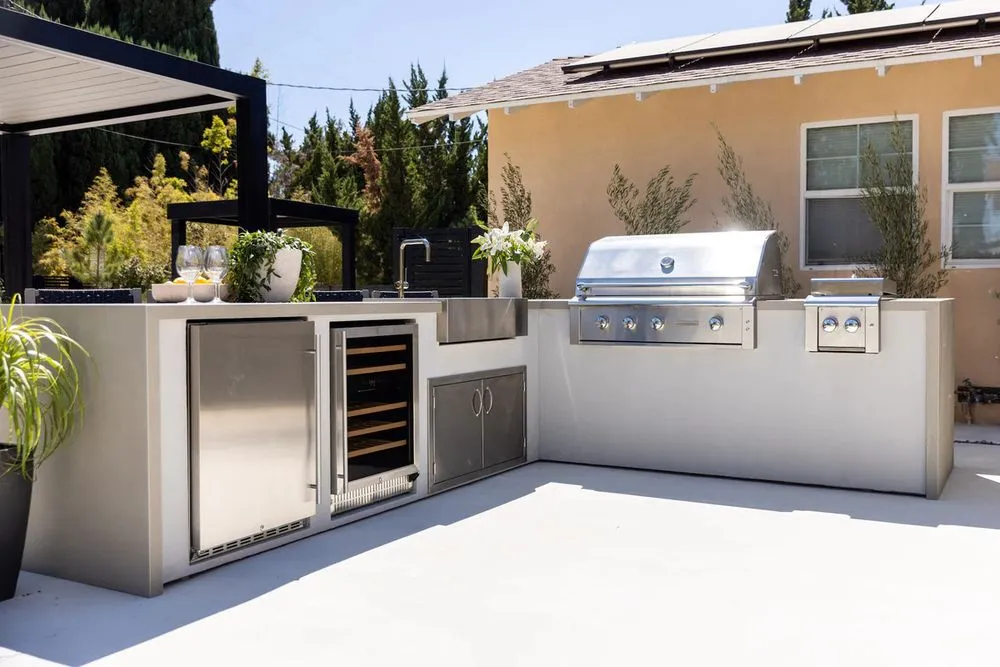
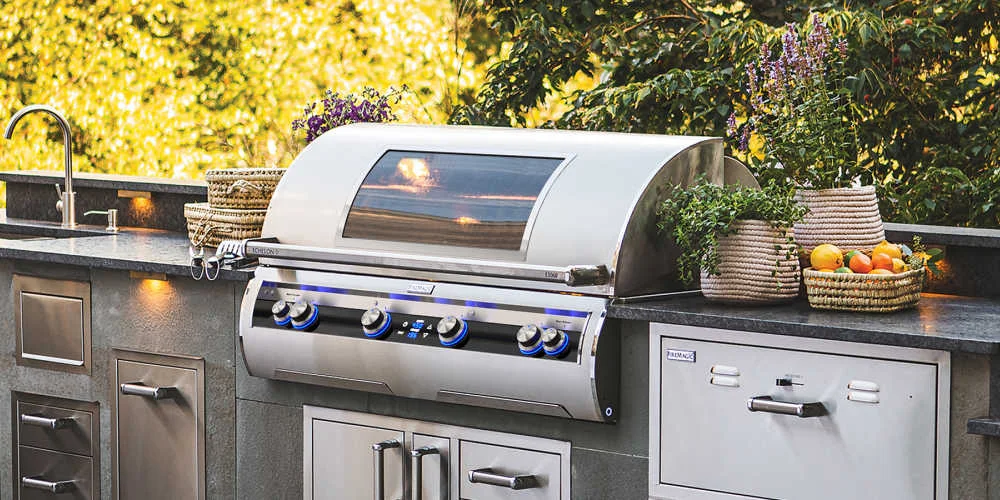
Stainless steel is not rust-proof. It is rust-resistant because of a thin chromium oxide layer that forms on the surface when the metal is exposed to oxygen. That layer heals itself if the surface is clean. When salt, chlorine, grease or iron particles sit on it, the layer cannot re-form in those spots, and you get rust freckles or a brown haze. Most of what looks like a bad grill is a dirty grill. This guide covers the exterior: hood, control panel, doors, drawers and island trim.
Why your stainless grill has rust spots
The causes we see on service calls, in order:
- Steel wool or carbon steel brushes used on the outside. They leave tiny iron particles that rust within days and look like the stainless is rusting.
- Salt air. Coastal grills get salt deposits that pull moisture out of the air and attack the surface. See salt air protection for grills.
- Pool chemicals, bleach and chloride cleaners. Chlorine is hard on stainless. Grills next to a pool or stored near pool supplies rust faster.
- Lower-grade stainless. Many budget grills use 430 stainless, which is magnetic and less corrosion resistant. Higher-end grills use 304. Even 304 needs more frequent cleaning in coastal areas, where 316 is the grade many corrosion guides suggest.
- Grease and food left on the surface for weeks.
- Moisture trapped under a non-breathable cover.
A quick magnet test tells you a lot. If a magnet sticks firmly to the hood or panel, it is likely 400-series stainless and will need more care.
Need the part? Pro Grill can find it
Send us your brand, model and the part you need. We source OEM parts, including ones that aren't listed in our online store.
Ask Pro Grill for a partWant a pro to handle it?
Most companies in our network are dealers or have dealer accounts, so they can usually bring the right part and install it in one visit.
Find the grain first
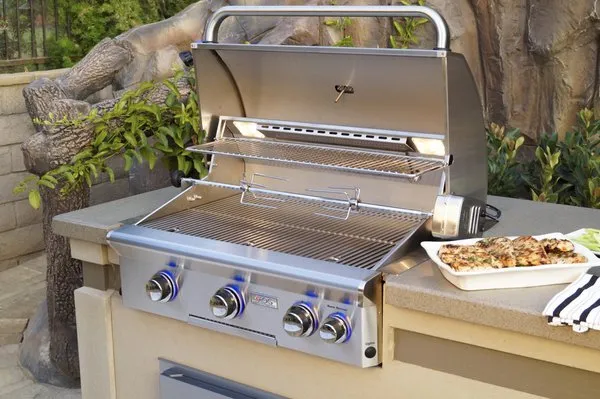
Look closely at the stainless and you will see faint parallel lines from the brushed finish. On most grills the grain runs side to side on the hood and front panel, and up and down on some doors and side panels. Every wipe, scrub and polish stroke should follow those lines. Scrubbing across the grain or in circles leaves visible swirl marks that catch light and dirt, and you cannot polish them out without refinishing.
Routine cleaning
Do this every few weeks, or weekly near the coast.
- Let the grill cool.
- Wash with warm water and a few drops of dish soap on a microfiber cloth, going with the grain.
- Rinse with a clean damp cloth or a gentle spray of fresh water. Soap residue attracts dirt.
- Dry completely with a clean microfiber towel. Water spots leave mineral deposits.
- Apply a stainless steel polish or a light coat of a grill-safe stainless spray, wiping with the grain, then buff off the excess.
Skip glass cleaners with ammonia on hot surfaces, and do not use the same cloth on the exterior that you used on the greasy firebox.
Removing rust spots and tea staining
Tea staining is the light brown, coffee-colored film you see on stainless near the ocean or pools. It is surface corrosion, and it usually comes off.
- Test any product on a hidden spot first, like the inside of a door.
- For light staining, use a non-scratch nylon pad with a paste of Bar Keepers Friend (oxalic acid) or a similar cleaner made for stainless. Rub gently with the grain.
- For heavier staining or freckles that come back, use a citric acid stainless cleaner or passivating gel. Apply, let it dwell for the time on the label, then scrub with the grain using a nylon pad.
- Rinse thoroughly with fresh water. Acid left on the surface keeps working.
- Dry completely, then polish.
For stubborn spots, a fine non-woven abrasive pad (gray or maroon) can be used carefully with the grain on brushed stainless. Never on mirror-polished trim. If rust has created actual pits you can feel with a fingernail, the steel underneath is damaged, and cleaning will only improve the look.

What passivation means and when to do it
Passivation is a chemical treatment that removes free iron from the surface and helps the chromium oxide layer re-form. Industrial passivation uses nitric acid, which is not a homeowner product. Citric acid passivating products sold for stainless are safer and do a good job on grills and outdoor kitchens. It makes sense after removing rust spots or tea staining, after any repair or fabrication work where steel tools touched the stainless, and once or twice a year on coastal grills. Wear gloves, follow the label, and rinse well.
Discoloration from heat
Gold, blue or bronze tint on the hood or around burner knobs is heat tint, not dirt. It happens when stainless gets very hot, often from running the grill on high with the lid closed for a long time, or from a grease fire. Mild heat tint can sometimes be lightened with an oxalic or citric acid cleaner. Heavy tint is permanent. If you see heat tint on the control panel, have the grill checked: it can mean heat is escaping forward because of a blocked rear vent, a grease fire, or an overheated burner. Our grill repair cost guide covers what that service usually runs.
Mistakes that ruin stainless
- Steel wool, wire brushes or carbon steel scrapers on the outside.
- Bleach, chlorine-based cleaners or pool shock stored next to the grill.
- Oven cleaner on exterior panels.
- Scrubbing in circles or across the grain.
- Pressure washing, which drives water into the controls.
- Leaving acid cleaners on without rinsing.
When to call a pro
If tea staining is widespread across a whole island, or you have built-in appliances from several brands with different finishes, a professional cleaning is often faster and safer. Many techs carry passivating products and can clean the firebox and check the gas parts during the same visit. Find an outdoor kitchen cleaning pro, or see outdoor kitchen cleaning prices.
If rust has eaten through parts like heat plates or knob bezels, many companies in our network are dealers who can get the right replacement and install it in the same visit. You can also browse parts directly, for example Lynx parts at the Pro Grill store or Fire Magic replacement parts, or send Pro Grill a part request if you cannot find it. Check the cost of replacement knobs if yours are pitted, and the grill cover cost guide for a breathable cover to slow the problem down.
Frequently asked questions
Why is my stainless steel grill rusting?
Usually steel wool or carbon steel tools left iron particles, or salt, chlorine and grease are sitting on the surface. Lower-grade 430 stainless also rusts more easily than 304 or 316.
Can I use Bar Keepers Friend on a stainless grill?
Yes, on brushed stainless. Use a soft cloth or nylon pad, rub with the grain, and rinse thoroughly so no residue is left behind. Test a hidden spot first.
What is tea staining on stainless steel?
A brown film of surface corrosion common near the ocean and pools. It is caused by salt and chlorides sitting on the steel and usually comes off with mild acid cleaners and regular washing.
Does WD-40 protect a stainless grill?
A light coat can repel water for a short time, but it collects dust. A stainless polish made for appliances or grills is a better choice, wiped on with the grain and buffed off.
How do I know which way the grain runs?
Look closely in good light for faint parallel lines in the finish. On most grill hoods and front panels they run side to side.
Can rust pitting on stainless be repaired?
Light pitting can be cleaned and passivated to look better, but the metal is damaged. Deep pits on a hood or panel usually mean refinishing or replacing that part.