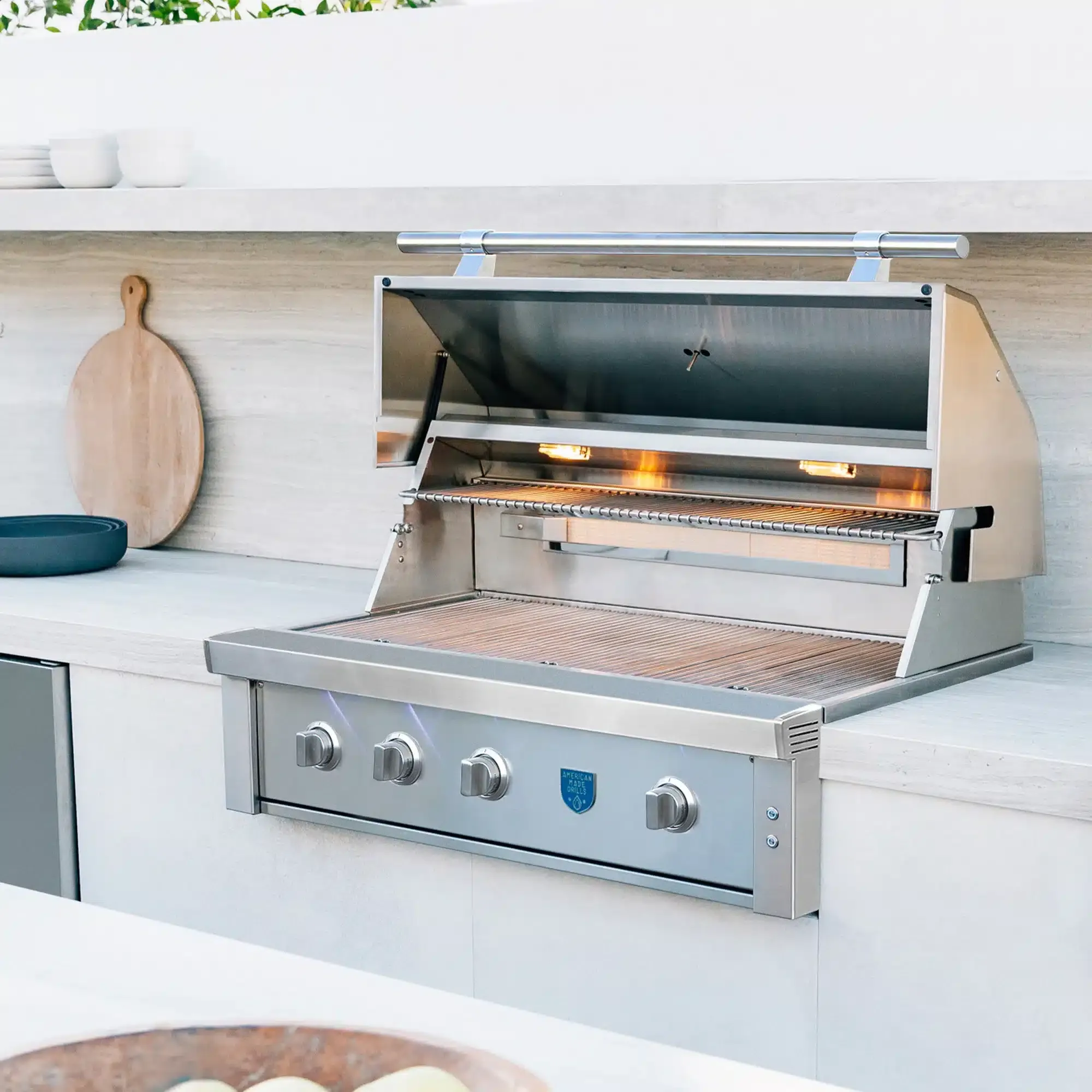
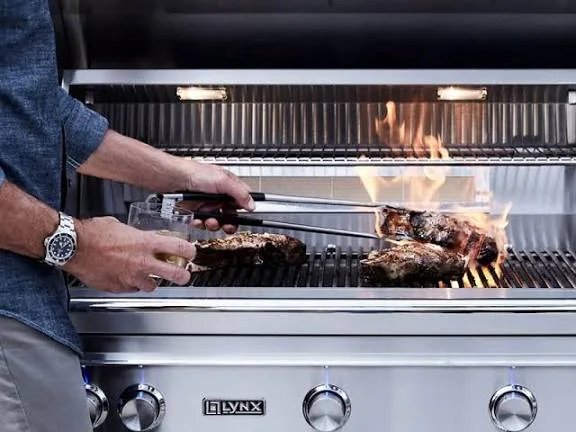
In places where nights drop below freezing, drain every water line, sink and faucet, shut down and empty the outdoor fridge and ice maker, shut off the gas, then clean and cover the grill. In mild climates you can usually keep the kitchen running and just clean it, check covers and watch for rodents.
Key points
- Water is what breaks outdoor kitchens in winter: drain sinks, faucets, supply lines and ice makers before the first hard freeze.
- Most outdoor fridge makers want the unit shut down once lows reach the mid to high 30s, not just at 32°F.
- The grill itself does not need winterizing, but it should be cleaned, shut off at the gas and covered with a breathable cover.
- Mice and moisture do more damage to islands over winter than cold does.
- In mild climates like coastal California and Phoenix, a deep clean and a good cover are usually enough.
Do you actually need to winterize?
It depends on how cold your nights get, not on the calendar. The parts of an outdoor kitchen that freeze and crack are the ones holding water: sink lines, faucets, ice makers, beer taps, and the refrigerator's cooling system when it runs in cold air. The grill, the island and the stainless doors handle cold fine.
A rough way to sort it out:
- Freezing climates (most of Utah, northern Arizona around Flagstaff and Prescott, mountain areas of California): Do a full shutdown. Along the Wasatch Front, overnight lows sit below freezing for weeks at a time, and one cold snap is enough to split a copper line or crack a faucet body.
- Mild climates (coastal and inland Southern California, the Phoenix and Tucson valleys, the Coachella Valley): You usually keep using the kitchen. Plan on a fall cleaning, a cover check and a quick look for rodents. If a rare freeze is forecast, drain the sink and ice maker for the night.
- In between (high desert, inland valleys with frost nights): Watch the forecast. Many outdoor fridges have to be shut down well above 32°F, so you may need to winterize refrigeration even if your pipes never freeze.
Need the part? Pro Grill can find it
Send us your brand, model and the part you need. We source OEM parts, including ones that aren't listed in our online store.
Ask Pro Grill for a partWant a pro to handle it?
Most companies in our network are dealers or have dealer accounts, so they can usually bring the right part and install it in one visit.
Supplies you will need
- Bucket and towels
- Adjustable wrench and a screwdriver for toe kicks and access panels
- Air compressor with a blow gun, or a shop vac that can blow (a small pancake compressor at 30 to 40 psi is plenty)
- Propylene glycol RV antifreeze, only if your ice maker or drain manual calls for it (never automotive antifreeze)
- Grill degreaser, nylon brush and a stainless cleaner
- Breathable, fitted covers for the grill and any open appliances
- Steel wool or copper mesh for plugging rodent gaps
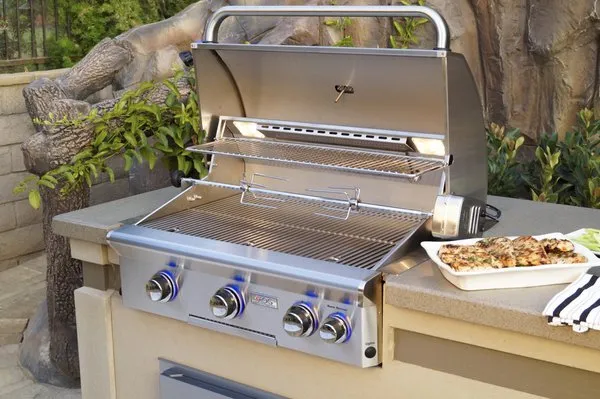
Step 1: Drain the sink, faucet and water lines
This is the step that saves you a plumbing repair in spring.
- Close the hot and cold supply valves that feed the outdoor kitchen. Many installs have a separate shutoff inside the house or garage. Use that one if you have it, since the line from there to the island is exposed.
- Open the faucet all the way, hot and cold, and leave it open.
- If your lines have drain valves or bleeder caps, open them and let the water run into a bucket.
- Blow out the lines with compressed air at low pressure until only air comes out of the faucet. Kalamazoo's winterizing instructions call for this same blow-out step with compressed air or CO2.
- For the best protection, take the faucet off and store it inside, then cap the supply stubs.
- Pour a little RV antifreeze into the sink drain trap if the trap cannot be removed, or remove the trap and leave it off until spring.
Hose bibs and spray heads in the island need the same treatment. A frost-free bib only works if the hose is disconnected.
Step 2: Shut down the outdoor refrigerator
Outdoor-rated fridges handle heat well, but most are not built to run in cold air. The compressor and thermostat behave badly when the air around the unit is colder than the setting inside. Marvel says to winterize its outdoor units when temperatures reach 38°F and that running below that voids the warranty. Kalamazoo lists 38°F for refrigerators, 42°F for beverage centers and 45°F for wine units. Check your own manual, because the number is often higher than people expect.
- Empty it, including the door bins.
- Turn it off at the control, then unplug it or shut off the breaker.
- Wash the inside with mild soap and water, rinse, and dry it.
- Pull the toe kick and vacuum the condenser area. This is where leaves and lint collect, and where mice like to nest.
- Clean the door gasket and leave the door propped open a few inches so it does not mildew.
You do not need to pull the fridge out of the island. Leaving it in place, off and dry, is what most manufacturers want.
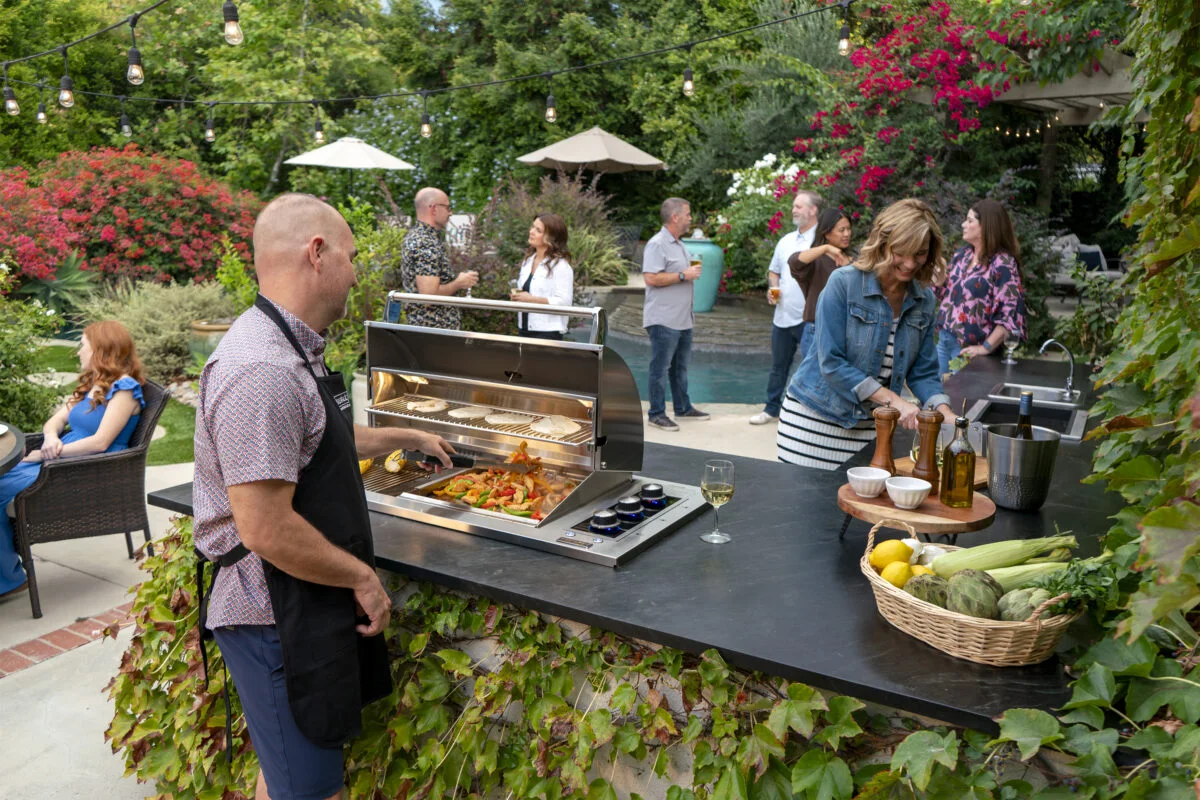
Step 3: Drain the ice maker and beer taps
Ice makers hold water in the reservoir, pump, valve and lines, and they are the most common freeze damage we see in outdoor kitchens. Kalamazoo says to winterize ice makers before temperatures drop below 45°F. Bull's guide follows the same general steps: clean the system, shut off power and water, drain the reservoir and lines, and on drain-pump models add a small amount of RV antifreeze.
- Run the cleaning cycle if your unit has one.
- Turn off power and close the water supply.
- Disconnect the water inlet and drain the reservoir and pump.
- Blow out the supply line.
- Throw out the ice, dry the bin and leave the door cracked.
For kegerators, drain and clean the beer lines and bring the keg and CO2 tank inside.
Step 4: Clean, shut off and cover the grill
The grill does not need winterizing in the plumbing sense, but winter is when grease and moisture do their slow damage.
- Do a full clean before you shut it down. Grease left in the firebox and drip tray holds moisture and attracts rodents. Our guide on deep cleaning a gas grill walks through it, or book an outdoor kitchen cleaning and have the fridge and island done at the same visit.
- Turn off the gas. On natural gas, close the shutoff valve in the island. On propane, close the tank valve and disconnect the tank.
- Keep propane tanks outdoors, upright and away from the house. Never store them in a garage, basement or shed.
- Pull the batteries from battery ignition modules so they do not leak and corrode the contacts. Unplug transformers for grill lights and rotisseries.
- Cover the grill with a breathable, fitted cover. A tight plastic tarp traps condensation against the stainless and can cause rust spotting. See what grill covers cost if yours is torn or shrunk.
If you plan to grill through the winter, skip the shutdown and just keep it clean. Propane pressure drops in very cold weather, so a grill may feel slower to heat. If it is badly underpowered, read why a grill won't get hot before blaming the cold.
Step 5: Rodent-proof the island
Mice move into warm, quiet islands in fall. In spring we find nests in burner venturis, chewed igniter wires, chewed hoses and droppings in the drip tray. Plug gaps around gas and electrical penetrations with copper mesh, do not leave food or grease in the island, and check inside the access doors once a month. Chewed wiring usually means new ignition parts, and a chewed gas hose means the grill stays off until a pro replaces it.
Mild climate checklist
If you are in Orange County, San Diego, Phoenix or Scottsdale, you are mostly doing fall maintenance:
- Deep clean the grill and drip tray after summer.
- Check covers for UV damage and replace any that are brittle.
- Clean the fridge condenser and check that the door seals.
- Look for spider webs in the burners and venturis, which cause lazy yellow flames and flashback.
- Run through the grill maintenance checklist.
- Near the coast, rinse and wipe stainless every few weeks. See protecting a grill from salt air.
Spring startup
- Close the drains, reinstall the faucet and turn the water back on slowly. Check under the sink for drips.
- Reconnect the ice maker, run a cleaning cycle and throw out the first batch of ice.
- Power up the fridge and give it a day to come down to temperature before loading it.
- Check the grill burners and venturis for nests, reconnect the gas and do a soap bubble test on the connections.
- Light each burner and look for steady blue flames.
If anything smells like gas, shut it off and read what to do when a grill smells like gas. A strong smell means shut off the supply, keep flames and sparks away, and call the gas utility or 911 from a safe distance.
Mistakes we see every spring
- Closing the water valve but leaving the faucet closed, which traps water in the line.
- Using automotive antifreeze in a drain or ice maker. It is toxic. Only use propylene glycol RV antifreeze where the manual allows it.
- Leaving the fridge running through a cold snap because the pipes did not freeze.
- Wrapping the grill in plastic, which holds moisture against the steel.
- Storing a propane tank in the garage.
If you find freeze damage or chewed parts in spring, most of the companies in our network carry dealer accounts and can bring the right parts for your grill. Find a pro near you, or if you need a specific part we do not list, ask Pro Grill to track it down. Have your model and serial number ready either way.
Frequently asked questions
Do I need to winterize my outdoor kitchen in Southern California or Phoenix?
Usually not in the full sense. A fall cleaning, a cover check and a rodent check are enough. If a rare freeze is forecast, drain the sink and ice maker for that night.
At what temperature should I shut down my outdoor refrigerator?
Check your manual, but many brands want outdoor fridges shut down once ambient temperatures hit about 38°F, and beverage and wine units even higher. Running them colder can damage them and may void the warranty.
Can I leave my gas grill outside all winter?
Yes. Clean it, shut off the gas, pull ignition batteries and use a breathable fitted cover. Keep propane tanks outdoors and upright, never in the garage.
Do I need to blow out the water lines or is draining enough?
In a hard freeze climate, blow them out. Low spots in the line hold water even after the faucet stops dripping, and that is where pipes split.
Can I use a grill in the snow?
Yes, as long as the area is clear and ventilated. Expect longer preheat times, and keep snow off the cover so it does not collapse onto the grill.