
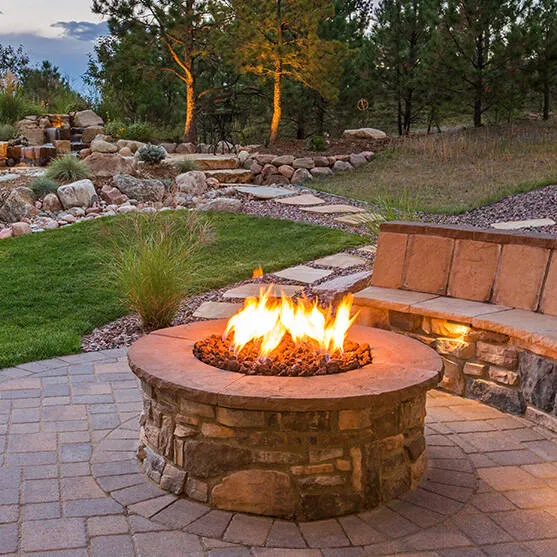
On propane, a small flame usually means the excess flow device tripped: turn everything off, disconnect the tank, reconnect, and open it slowly. If that does not help, look at tank size and temperature, the regulator, an undersized or kinked gas line, media piled too deep, and clogged burner holes.
Key points
- A tripped excess flow device is the most common cause of a weak propane flame.
- A small tank in cold weather cannot vaporize enough gas for a big burner.
- Media piled too deep chokes the flame. Follow the manufacturer's depth.
- Natural gas pits need a line sized for their BTU rating and run length.
- Clogged burner holes show up as dead spots or a flame that only burns on one side.
What normal looks like
Flame height depends on the burner's BTU rating, the fuel, and the media. A small tabletop pit will never look like a big built-in. Check the manual for the BTU rating and compare it with what you are seeing. A flame that used to be taller, or one that is weak on one side, points to a real problem.
Wind matters too. A breeze knocks the flame down and makes it look smaller. Check on a calm evening before chasing parts.
Need the part? Pro Grill can find it
Send us your brand, model and the part you need. We source OEM parts, including ones that aren't listed in our online store.
Ask Pro Grill for a partWant a pro to handle it?
Most companies in our network are dealers or have dealer accounts, so they can usually bring the right part and install it in one visit.
Common causes, in the order techs see them
1. Tripped excess flow device
Propane tank fittings have a safety device that restricts flow if gas rushes out too fast. Opening the tank valve quickly, or opening it while the fire pit valve is already on, trips it. The result is a low, lazy flame that will not get bigger no matter how far you turn the knob.
To reset it:
- Turn off the fire pit valve and the tank valve.
- Disconnect the regulator from the tank and wait a minute.
- Reconnect it hand tight.
- Open the tank valve slowly, a quarter turn at a time, until fully open.
- Then open the fire pit valve and light it.
2. Tank too small, too cold or nearly empty
Propane has to boil off from liquid to gas inside the tank. A standard 20 pound tank can only make so much gas, and less when it is cold or low. Big burners can outrun it, especially on long burns in winter. Frost on the outside of the tank is the giveaway. Larger burners often need a bigger tank or a permanent supply.
3. Regulator problems
Every gas fire pit has a regulator somewhere, at the tank, at the valve, or both. Regulators wear out, get water in the vent, or are the wrong capacity for the burner. A regulator that sticks low gives a flame that stays small at any setting.
4. Undersized or kinked gas line
Natural gas pits need a supply line sized for the burner's BTU and the length of the run. Long runs, small pipe, and other gas appliances on the same line all cut flow. Flex lines with tight bends make it worse. On propane, a kinked hose or a long, thin hose does the same thing.
5. Media too deep
Lava rock, glass and stones go over the burner to spread and hold the flame. Piled too deep, they choke it, and the flame struggles to get through. Too much media can also cause soot and uneven burning. Follow the depth your manufacturer gives. Many call for only a thin layer over the burner.
6. Clogged burner holes
Dirt, rust flakes, melted debris and insects block the ports. You see dead spots, a flame that only burns on one side, or flames that rise in only a few places.
7. Key valve not fully open
On pits with a key valve, a partly opened valve limits flow. Turn it fully open and control the flame from there if your manual allows.
8. Wrong orifice or fuel
A pit built for natural gas run on propane, or the other way around, without proper conversion, will burn poorly and can be unsafe. Altitude also affects flame. If the pit was moved, converted, or bought used, confirm the orifice matches your fuel.
Step-by-step checks you can do
- Check the flame on a calm day so wind is not fooling you.
- On propane, do the excess flow reset above.
- Weigh the tank or check the gauge. Try a full tank and compare.
- Feel for frost on the tank during a long burn. If it frosts up, the tank is too small for the burner.
- Walk the hose or flex line and remove any kinks or tight bends.
- With the gas off and the pit cool, pull the media back. Light the burner bare for a moment and look at the flame. If it is strong bare and weak with media, you have too much media. Put it back thinner.
- With the gas off, brush the burner with a soft brush and use compressed air to clear the ports.
- On natural gas, note whether the flame drops when the furnace, water heater, or grill is running. That points to an undersized supply line.
What a pro does and when to call
Call a pro if the flame stays low after these checks, if you suspect an undersized line, if a regulator needs replacing on a natural gas system, if the pit was converted, or if you smell gas. A fire pit tech will check gas pressure at the inlet with the burner running using a manometer, confirm the regulator and orifice match the burner, inspect the line sizing, and replace burners or regulators when needed. Gas line changes may need a licensed plumber. Many companies in our network are dealers for fire pit brands and carry the parts to fix it on one visit. Browse fire pit repair companies or search for a pro by ZIP. Pair the visit with a fire pit cleaning to clear the burner and media. Our fire pit repair cost guide covers typical pricing, and the maintenance guide explains what to do each season. If it will not light at all, see fire pits that won't light.
Parts that usually fix it
- Regulators, burners, orifices and valves: see fire pit parts costs.
Burners and regulators should match the BTU rating and fuel of the pit. Brands like American Fyre Designs, Firegear and Elementi each spec their own parts. Find the model or burner tag before ordering, and buy OEM for regulators and valves. If you cannot find it, send Pro Grill a parts request.
Frequently asked questions
Why is my propane fire pit flame so low?
Most often the excess flow device in the tank fitting has tripped. Turn everything off, disconnect and reconnect the tank, and open the tank valve slowly before turning on the fire pit.
Can too much lava rock or glass lower the flame?
Yes. Media piled too deep chokes the flame and can cause soot. Follow your manufacturer's recommended depth, which is often just a thin layer over the burner.
Why does my fire pit flame get smaller the longer it runs?
On propane, the tank is getting cold and cannot vaporize gas fast enough. A larger tank or a permanent supply line fixes it.
Can I adjust the regulator to get a bigger flame?
No. Regulators are set at the factory for safety. If the flame is low, find the real cause or have a pro check pressure and sizing.
Why is my natural gas fire pit flame weak?
Usually the gas line is too small or too long for the burner, or other appliances are pulling from the same line. A pro can measure pressure with the burner running to confirm.